

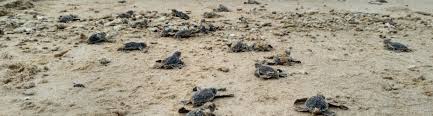

Our internship program offers hands-on training in turtle conservation, field monitoring techniques, public speaking, data entry, and community engagement. Over 10 weeks, you’ll be involved in all aspects of running a conservation program from night patrols and hatchery work to educational talks and public outreach.
To ensure you’re fully prepared, all interns complete a 2–3 week training program upon arrival. By the end of this, you should be confident and capable of working independently within the team.
Responsibilities.
Field Work
- Conduct nightly beach patrols to monitor nesting turtles
- Relocate eggs to the hatchery and release hatchlings
- Manage in-situ nests when required
- Record data on nesting turtles and hatchlings
- Post-hatch nest excavations and analysis
- Run Experiential/Volunteer Program
- Lead environmental education workshops
- Educate participants on conservation work
- Ensure participants safety during working hours of the program
- Guests Education & Public Awareness
- Conducting educational “turtle talks” to guests on a daily basis
- Guide and educate visitors during turtle sightings
- Manage guest behavior respectfully to protect turtles
- Indoor & Office Work
- Data entry and maintaining project database
- Post-excavation examination and data collection on deceased/unfertilized eggs
- Managing merchandise stocks and sales
- Data entry and reporting for grant application purposes
- Sending emails to sponsors
- Assisting with social media updates
- Production of merchandise to raise fund (seaglass jewelleries)
- General Conservation Tasks
- Building/maintaining/dismantling the turtle hatchery (subject to intake period)
- Organize daily beach cleans
- Trash sorting and recycling
- Carry supplies during island deliveries
- Occasionally guide workshops for resort guests
- Maintain and upkeep cleanliness of conservation hall and intern accommodation quarters
Daily Rhythm
- Interns will be rotated into shifts (Day, PM and AM).
- Day shift (9AM - 9PM); PM shift (2PM - 2AM); AM shift (3AM - 6:30PM), with rest hours in between.
- The schedule is designed to balance hands-on conservation work, experiential program facilitation, administrative tasks, and rest.
- Night time turtle conservation can be physically demanding, so mornings are often kept free for the patrol shifts (PM and AM) when possible to ensure proper rest.
- The Day shift will focus on administrative work, running experiential program, daytime conservation work and conducting turtle talks.
- Working hours and scope may be adjusted or extended during busy periods, depending on operational needs.

![[Interview] Côme, co-founder of La Joist - training in energy renovation](https://images.prismic.io/jobsthatmakesense/5580830a-f854-46cf-8152-1af73cd3eac1_LaSoliveSelection-63_sansmarque-min.jpg?auto=compress,format&rect=0,648,5184,2160&w=1920&h=800)






![[Testimonials] Their professional retraining has made them happier](https://images.prismic.io/jobsthatmakesense/3b91b678-b786-4d40-9322-a8ee4e9ba8a7_cynthia-magana-mFPJXEQfb9M-unsplash.jpg?auto=compress,format&rect=0,1210,6000,2500&w=1920&h=800)